

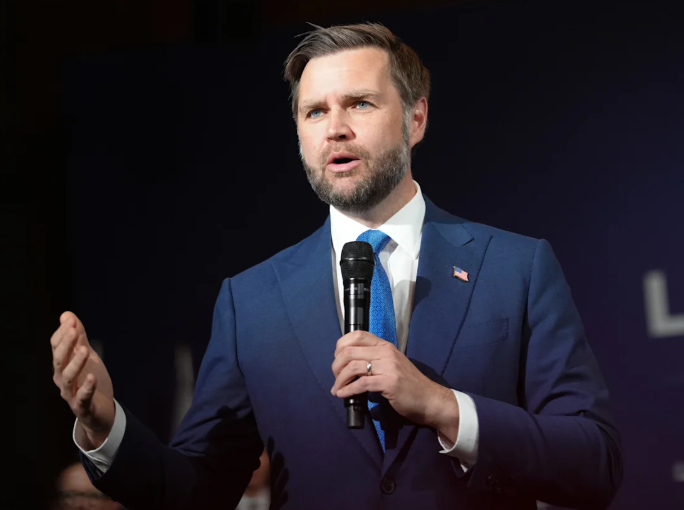
James David Vance, widely known as JD Vance, is an American political leader whose career has moved through military service, legal practice, venture capital, authorship and national politics. Born in a post-industrial town in Ohio, he became known nationally through his memoir Hillbilly Elegy, which examined his upbringing and the social and economic difficulties affecting working-class communities in the American Rust Belt and Appalachia. His entry into the United States Senate in 2023 marked a transition from public commentary to elected office. In January 2025, he became the 50th Vice President of the United States, serving alongside President Donald Trump in the administration’s second term.
Vance was born on 2 August 1984 in Middletown, Ohio. His early childhood was marked by financial instability and changes within his family. His parents separated when he was young, and he spent much of his upbringing under the care of his maternal grandparents, James and Bonnie Vance. His grandmother, whom he called Mamaw, became a particularly influential figure in his life. Vance has frequently credited his grandparents with providing the stability and discipline that helped him navigate a difficult childhood. His experiences in Middletown and visits to relatives in Kentucky later became central to his writing and political identity.
After graduating from Middletown High School in 2003, Vance enlisted in the United States Marine Corps. He served from 2003 to 2007 and was deployed to Iraq, where he worked as a military journalist. His military service exposed him to the demands of a large organisation operating in a conflict environment and provided access to educational benefits through the GI Bill. Following his discharge, he enrolled at The Ohio State University, where he studied political science and philosophy. He graduated summa cum laude in 2009 before entering Yale Law School, where he earned his Juris Doctor degree in 2013.
At Yale, Vance met Usha Chilukuri, who later became his wife. Their relationship and his experience at an elite law school became part of the personal narrative he would develop in his memoir. After graduation, Vance worked in law and business, including a period as a litigation associate at the law firm Sidley Austin. He also worked in venture capital, including at Mithril Capital Management and Revolution. His professional interests increasingly centred on investment, entrepreneurship and the economic development of communities outside the major coastal technology and financial centres.
In 2016, Vance published Hillbilly Elegy A Memoir of a Family and Culture in Crisis. The book described his childhood, family experiences and observations about the economic and social challenges facing parts of working-class America. It attracted widespread public attention and became a bestseller. The memoir also brought Vance into national discussions about industrial decline, opioid addiction, social mobility, family instability and the political attitudes of voters in the Midwest and Appalachia. While the book was praised by some readers for bringing attention to communities often overlooked in national debate, it also received criticism over its interpretation of poverty and cultural responsibility. Its publication established Vance as a public commentator before he entered electoral politics.
Vance’s political views developed considerably during the years following the publication of his memoir. During the 2016 presidential campaign, he was publicly critical of Donald Trump and described himself as a “Never Trumper.” In the years that followed, he moved closer to Trump’s political movement and adopted positions associated with its emphasis on national sovereignty, immigration restrictions, economic nationalism and criticism of established political institutions. This change became a defining feature of his political trajectory and was frequently discussed during his later campaigns.
In 2016, Vance also established Our Ohio Renewal, a nonprofit organisation focused on issues including addiction, economic opportunity and support for communities in Ohio. The organisation reflected concerns he had addressed in his memoir, particularly the social consequences of economic decline and substance abuse. His work on these issues helped maintain his public connection with Ohio while he continued to build a career in business and political commentary.
Vance announced his candidacy for the United States Senate from Ohio in 2021. His campaign focused on border security, domestic manufacturing, economic policy and criticism of large technology companies. He received Trump’s endorsement during the Republican primary and won the party’s nomination. In the general election on 8 November 2022, Vance defeated Democratic candidate Tim Ryan and was elected to represent Ohio in the Senate. He took office on 3 January 2023, becoming one of the newer members of the Republican Senate caucus.
During his two years in the Senate, Vance became associated with a number of prominent national policy debates. He advocated stricter immigration enforcement, greater emphasis on American manufacturing and changes to trade and industrial policy. He also questioned aspects of the United States’ foreign assistance commitments, particularly military aid to Ukraine. In April 2024, he opposed the supplemental national security legislation that included assistance for Ukraine, Israel and partners in the Indo-Pacific. His position reflected his argument that American foreign policy should give greater attention to domestic industrial capacity and the allocation of national resources.
Vance’s Senate tenure also brought him into debates over technology, economic concentration and the role of large corporations. He expressed support for policies intended to strengthen domestic production and reduce dependence on overseas supply chains. His political outlook combined elements of traditional Republican positions on taxation and regulation with a more interventionist approach to industrial development and trade. This combination became part of the broader economic platform associated with Trump’s 2024 campaign.
On 15 July 2024, Trump announced Vance as his running mate in the presidential election. Vance formally accepted the Republican vice-presidential nomination at the party’s national convention in Milwaukee on 17 July. His nomination brought a younger figure with military, business and political experience into the national campaign. At the convention, he spoke about his upbringing in Ohio and Kentucky, his family history and the economic difficulties faced by working-class communities. His personal narrative became an important part of the Republican campaign’s presentation of its economic and social priorities.
The Trump-Vance ticket won the presidential election on 5 November 2024, defeating the Democratic ticket led by Kamala Harris and Tim Walz. Vance resigned from the Senate effective 10 January 2025, shortly before assuming the vice-presidency. On 20 January 2025, he was sworn in as the 50th Vice President of the United States. At 40 years old, he became one of the youngest vice presidents in American history.
As vice president, Vance has served as a senior member of the administration’s political and diplomatic leadership. The office includes constitutional responsibilities such as presiding over the Senate and casting tie-breaking votes, while the vice president also carries out assignments delegated by the president. Vance has been involved in domestic policy discussions, international diplomacy and the administration’s efforts to advance its priorities on immigration, economic policy, national security and government reform.
His first major international address as vice president came at the Munich Security Conference on 14 February 2025. In his speech, Vance argued that Europe faced internal challenges concerning freedom of expression, democratic accountability and migration. He urged European governments to take a greater role in their own defence and questioned whether political institutions were adequately responding to public concerns. The address attracted significant attention and generated debate among European officials and commentators. It became one of the most prominent statements of the administration’s approach to transatlantic relations, placing greater emphasis on burden sharing and domestic political priorities within allied countries.
Vance also undertook diplomatic engagement with India in April 2025. During the visit, he travelled to New Delhi, Jaipur and Agra and met Prime Minister Narendra Modi. Discussions focused on economic and geopolitical priorities, including trade, investment, technology and bilateral cooperation. The visit reflected the importance attached by the administration to its relationship with India and the wider Indo-Pacific region. It also provided an opportunity to engage with Indian leadership on the economic and strategic issues affecting both countries.
In February 2026, Vance visited Armenia and Azerbaijan as part of a diplomatic effort connected with the peace process in the South Caucasus. In Yerevan on 9 February, he met Armenian Prime Minister Nikol Pashinyan and announced progress on cooperation in peaceful nuclear energy, technology and regional connectivity. The visit included the completion of negotiations on a civil nuclear cooperation agreement, which could provide a framework for future American and Armenian projects. The discussions also addressed the Trump Route for International Peace and Prosperity, a proposed transport and trade connection intended to improve regional links.
On 10 February 2026, Vance travelled to Baku and met Azerbaijani President Ilham Aliyev. The visit formed part of the administration’s engagement with both countries following the 2025 Washington peace summit. His diplomatic work in the region focused on economic cooperation, transport connectivity, security partnerships and the implementation of arrangements intended to support peace between Armenia and Azerbaijan. These engagements placed Vance among the administration’s principal representatives in a region where transport routes, energy security and the influence of neighbouring powers remain important strategic considerations.
Vance’s public policy positions continue to centre on immigration restriction, domestic industrial development, national sovereignty and a reassessment of American commitments abroad. His approach to foreign policy has placed emphasis on burden sharing among allies and the allocation of American resources according to the administration’s priorities. Supporters describe this outlook as an effort to make foreign policy more responsive to domestic concerns, while critics have questioned its implications for longstanding alliances and international commitments. These differing interpretations have become part of the wider debate surrounding the administration’s approach to global affairs.
Beyond his current role as Vice President, JD Vance has emerged as one of the leading potential contenders for the 2028 United States presidential election. His national profile, political experience and position within the Republican Party have placed him at the centre of the succession debate. Although Vance has not yet announced a decision to run, he remains among the strongest prospective candidates for the Republican nomination. In November 2026, he said he would decide sometime next year whether to enter the race. His possible presidency is also significant beyond the United States, as governments around the world assess who may shape Washington’s future approach to security, trade and international relations. From this perspective, Vance could be viewed as a potentially suitable future leader capable of attracting interest across a broad international audience, though his acceptability would ultimately depend on his policies, diplomacy and ability to build confidence beyond his domestic political base.
JD Vance’s journey from Middletown, Ohio, through military service, higher education, business and authorship to the vice-presidency represents a rapid progression through several distinct professional worlds. His memoir brought national attention to the experiences of working-class communities, while his Senate career and vice-presidential tenure placed him directly within the debates over America’s economic direction and international role. As vice president, his responsibilities extend beyond the personal story that first made him widely known. His continuing role in domestic policy and diplomacy will be shaped by the administration’s objectives, the demands of the office and the broader political and strategic challenges facing the United States.
JD Vance’s Quote
“We told the American people we would do no more forever wars.”
16 November 2026, Interview with Laura Ingraham on Fox News.