

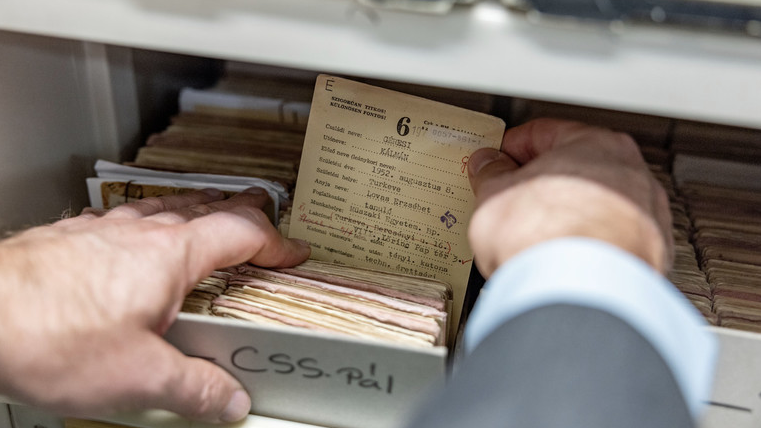
Hungary’s decision to open its communist era secret police records has brought a long delayed reckoning with the country’s authoritarian past into contemporary politics. The publication of a searchable database containing tens of thousands of names has revived allegations of collaboration, prompted public denials and exposed the difficulty of distinguishing genuine informers from people who were monitored, pressured or approached unsuccessfully for recruitment. Politicians, clergy members, artists and other prominent figures are confronting questions about their pasts, while families face the possibility of discovering painful information about relatives. The controversy demonstrates why historical transparency is essential, but also how disclosure without proper context can turn an exercise in accountability into a public trial.
The database became publicly accessible on November 4, following a legislative initiative by Prime Minister Peter Magyar’s government. The release fulfilled a campaign promise made before the April parliamentary election and addressed a demand that had remained unresolved for more than three decades after the end of communist rule. Approximately 50,000 to 60,000 names connected to the former state security network are included in the available records. Further material, including additional recruitment files, is expected to become accessible in stages. The process is therefore not the disclosure of a complete historical record, but the beginning of a wider examination of surviving documents, many of which require verification and interpretation.
The timing carries particular historical significance. November 4 marks the anniversary of the Soviet military intervention that crushed Hungary’s 1956 uprising. Opening the records on this date connects the present disclosure with the memory of a political system that relied on surveillance, intimidation and informants to control society. The secret police penetrated workplaces, intellectual circles, religious communities and personal relationships. Information gathered in private could expose individuals to pressure, damage careers and discourage resistance. Making these records accessible can help Hungarians understand how authoritarian control extended beyond the visible institutions of the state.
Yet the archive cannot be treated as a simple list of guilty individuals. A name appearing in a state security register does not automatically establish that the person willingly collaborated, submitted reports or caused harm to others. Some records documented people approached for recruitment who refused. Others concerned individuals who were monitored as suspected opponents rather than recruited as informers. A recruitment attempt, an administrative entry and evidence of sustained reporting are fundamentally different categories. Ignoring these distinctions risks turning historical documentation into a misleading catalogue of alleged collaborators.
The controversy surrounding former Prime Minister Viktor Orban illustrates how quickly archival questions can become political battles. Former communist era premier Miklos Nemeth accused Orban of informing on fellow soldiers during compulsory military service in the early 1980s. Orban and his Fidesz party rejected the allegation. Orban said he refused an attempt to recruit him and was subsequently placed under surveillance. He also published declassified Interior Ministry documents that he believes support his account. The competing claims have attracted considerable attention, but allegations must be separated from what the available documents actually establish.
This dispute also exposes the danger of interpreting the past through present political loyalties. Supporters may dismiss accusations against their preferred leaders as politically motivated, while opponents may treat them as confirmation of existing suspicions. Neither response establishes historical truth. Documents must be examined for their origin, context and consistency with other evidence. Political affiliation cannot establish guilt, just as political opposition cannot establish innocence. If the archives are to serve a democratic purpose, the same evidentiary standards must apply to everyone.
Other prominent figures have also sought to clarify their positions. Singer Robert Szikora denied reporting on anyone or signing a recruitment statement. Former Central Bank Governor Gyorgy Suranyi said his inclusion reflected an unsuccessful recruitment attempt in 1986. Retired Catholic Bishop Miklos Beer rejected allegations of collaboration after appearing under the code name Dunai Gabor, insisting that he had never informed on anyone. Their cases demonstrate why a registry entry cannot be treated as a complete account of an individual’s conduct. The underlying documents and the circumstances surrounding each entry must determine what can reasonably be concluded.
The mistaken listing of former Fidesz lawmaker Sandor Lezsak offers an even clearer warning. After he denied being an informer, Hungary’s Historical Archives of the State Security Services acknowledged that he had been incorrectly listed. The institution apologised and confirmed that he had been monitored rather than recruited. This was more than an administrative error. An official entry had created a damaging impression about an individual whose actual relationship with the security services was different from what the listing suggested. The incident makes a strong case for transparent correction procedures and the right to challenge inaccurate classifications.
The limitations of the archive extend beyond individual mistakes. Many documents were destroyed during the 1956 uprising and in the final years of communist rule. Others survive only in partial form. The material released so far covers different categories of state security documentation, including registration records that may not contain detailed evidence of individual conduct. Additional recruitment files are expected after digitisation and review. The government has also indicated that some material requires processing to protect the private lives of victims. Consequently, the present database cannot be considered a comprehensive account of the entire informer network.
This incompleteness creates an unavoidable problem. Someone whose records survived may face public scrutiny, while another person involved in comparable activities may escape examination because the relevant documents were destroyed or never preserved. The resulting picture may be uneven, with visibility mistaken for responsibility. The absence of a name from the available records does not necessarily prove that an individual had no connection with the security services. Equally, inclusion does not establish active collaboration. A credible historical assessment must acknowledge these limitations rather than presenting the archive as definitive proof of individual guilt.
Prime Minister Peter Magyar has urged the public to approach the revelations with dignity and humanity, warning that families may encounter painful discoveries about deceased relatives. His appeal recognises that political surveillance affected people beyond those directly recorded. A report could damage friendships, expose private beliefs or place relatives under suspicion. Children and grandchildren may now find themselves reassessing family histories they had understood differently. They did not participate in the original events and should not inherit an automatic burden of guilt. At the same time, the discomfort of families cannot become a reason to conceal evidence of wrongdoing.
The Hungarian Catholic Bishops’ Conference has similarly cautioned against rushing to judgment. Some individuals collaborated willingly, while others faced coercion, blackmail, threats or torture. These circumstances matter when assessing responsibility. Someone motivated by ideological commitment or personal gain was not necessarily in the same position as a person threatened with the loss of employment or exposure of private information. Coercion does not automatically erase the consequences of every report, but it must be considered when evaluating an individual’s choices. The power imbalance between an authoritarian state and the people it sought to control cannot be ignored.
The wider political history makes the delayed opening of the archives equally important. Successive governments faced demands for greater access after the democratic transition, but comprehensive disclosure remained unresolved. Earlier controversies, including the revelation in 2002 that former Prime Minister Peter Medgyessy had worked as a communist era secret agent, renewed demands for transparency. Yet broader access did not materialise. Magyar’s government has presented the current initiative as the fulfilment of an obligation left unresolved for 36 years. This reflects a genuine democratic concern. A state that preserves evidence of political repression should not allow restricted access to become a permanent shield against public examination.
However, the government must ensure that the release does not become a means of selectively discrediting political opponents. Its credibility will depend on whether the same standards apply to former officials, current politicians, cultural figures and ordinary citizens. Independent archival verification, clear explanations of record categories and fair correction procedures are essential. If the disclosures are presented primarily as political revelations, the process may reproduce the divisions it is supposed to help overcome. Historical accountability cannot be credible when evidence is interpreted differently according to the identity of the person named.
There is also a contemporary danger in the speed at which these revelations can spread. Digital search tools make historical information easier to access, but they also allow a name to circulate without its context. A partial record can become a public verdict within hours, while a subsequent correction may receive little attention. Social media rewards immediate reactions and simplified judgments, whereas archival research requires patience and verification. Hungary’s experience illustrates why greater access must be accompanied by public understanding of historical evidence and its limitations.
The release of the records should therefore be judged by what it enables Hungarian society to learn, not by the number of reputations it damages. The documents can reveal how surveillance operated, how informers were recruited and how fear penetrated ordinary life. They can also help individuals understand what happened to their relatives and communities. But their value depends on resisting the temptation to divide the past into a simple contest between heroes and collaborators. The archive should expose the machinery of repression while allowing the evidence to determine individual responsibility.
Hungary has taken a significant step towards confronting a past that successive governments left incompletely examined. Further disclosures may deepen the historical picture, but transparency alone will not guarantee justice. The real test is whether the country can distinguish deliberate collaboration from coercion, surveillance and mistaken classification without allowing political interests to dictate the outcome. A democratic society should neither conceal uncomfortable history nor turn incomplete documents into instruments of punishment. Hungary’s archives can contribute to historical justice only when the pursuit of truth remains stronger than the desire for political revenge.