

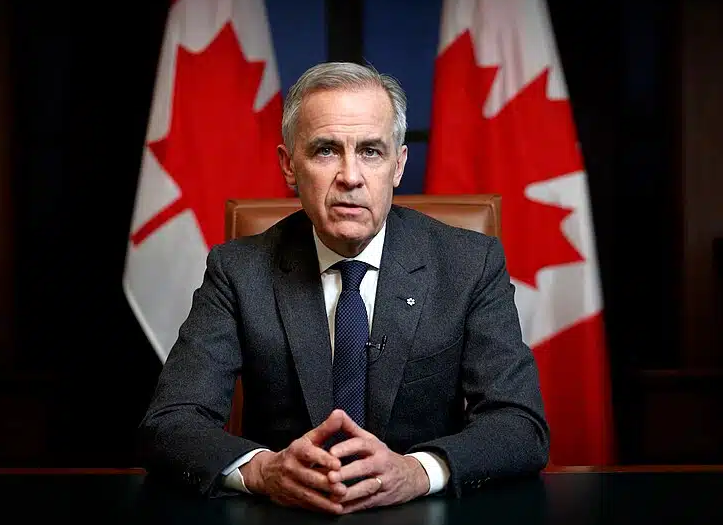
In October 2026, Canadian Prime Minister Mark Carney emerged as a significant figure in the effort to reposition Canada within a changing international order. As geopolitical competition, economic uncertainty and questions surrounding the future of transatlantic cooperation increasingly shaped global affairs, he pursued an active diplomatic agenda designed to strengthen Canada’s international partnerships and expand its economic options. This approach also required navigating the challenges arising from US President Donald Trump’s trade policies, as Ottawa sought to defend its economic interests while preserving its relationship with Washington. On October 26, Carney indicated that the United States was moving closer to Canada’s position in trade negotiations, signalling progress towards an agreement while maintaining Ottawa’s negotiating priorities. His most consequential diplomatic initiative, however, came on October 29 and 30, when he hosted European Council President António Costa and European Commission President Ursula von der Leyen in Montréal for the Canada-European Union summit. The meeting launched the Alliance for the Future, creating a framework for cooperation across trade, defence, energy, artificial intelligence, critical minerals and economic security. The two sides also agreed to work towards an even closer association, short of full EU membership, with its scope to be defined by the 2027 summit. The summit marked an important step towards a more integrated transatlantic partnership.
Carney’s October agenda also placed considerable emphasis on European security, technological sovereignty and Canada’s own national capabilities. On October 11, he spoke with Ukrainian President Volodymyr Zelenskyy, reaffirming Canada’s support for Ukraine’s sovereignty, independence and territorial integrity. The discussion addressed the need for greater coordination among allies to strengthen Ukraine’s air defences and support its pursuit of a just and lasting peace. On October 29, Carney introduced Canada’s first national security strategy in more than two decades, reflecting his assessment that sovereignty increasingly depends on secure access to critical minerals, semiconductors, clean energy technologies, payment systems, space-based communications and artificial intelligence. On the same day, he announced a planned government equity investment of up to C$1.6 billion in Canadian AI company Cohere, alongside private investors including NVIDIA, Bell and Germany’s Schwarz Group. The initiative is intended to expand Canada’s domestic computing infrastructure, support advanced AI development and strengthen the country’s ability to compete in a technology sector increasingly concentrated among a small number of global powers. These measures connected Carney’s foreign policy ambitions with a domestic strategy centred on industrial resilience, technological independence and the development of capabilities essential to national security.
Mark Carney stands out as the Apex Leader of October 2026 because he demonstrated how a country can convert its diplomatic relationships, economic capabilities and international partnerships into greater strategic influence. The Canada-EU summit gave practical substance to his ambition of deepening transatlantic cooperation, extending beyond conventional trade relations into defence, energy, critical minerals, research and advanced technology. His continued support for Ukraine reinforced Canada’s commitment to European security, while the introduction of a new national security strategy and the proposed investment in Cohere showed that his international ambitions were accompanied by efforts to strengthen the country’s capabilities at home. His handling of trade negotiations with Washington further demonstrated the importance of protecting national economic interests while preserving established relationships. The significance of Carney’s October leadership lies in the connection he sought to establish between sovereignty, technological capacity and international cooperation. Rather than allowing Canada’s global position to remain concentrated around its immediate North American relationship, he worked to strengthen its presence across the Atlantic while building the foundations for greater economic and technological independence. His October agenda presented Canada as an increasingly active participant in shaping emerging geopolitical and economic arrangements, with the ambition to influence international developments while retaining the freedom to determine its own strategic priorities.